

Executive Summary
- Most passengers are surprised to discover that a hot air balloon ride often feels similar to the temperature on the ground, with only gradual cooling as the balloon gains altitude.
- The burner provides periodic bursts of warmth, while the open-air basket allows fresh air to circulate, preventing the ride from feeling excessively cold or overly hot.
- Dressing in easily removable layers and wearing closed-toe shoes is the best way to stay comfortable during a sunrise or sunset flight, regardless of the season.
- Experienced commercial hot air balloon ride operators like Rainbow Ryders carefully schedule flights during favorable weather conditions, helping ensure a comfortable, safe, and memorable experience.
Don’t Expect Abrupt Changes in Temperature
Anyone who has seen a snow-capped mountain knows that temperatures get colder the higher up something goes, leading many first-time passengers to wonder how cold it gets in a hot air balloon.
If you are hot air ballooning in the southwestern United States, chances are you won’t need a bulky parka because the altitude of a recreational hot air balloon ride isn’t high enough to lead to significant changes in temperature. Plus, there are other elements keeping the ride comfortable for passengers, such as the occasional burst of warmth from the burner and the fact that you move with the wind, essentially eliminating wind chill.
As a result, many passengers compare the temperature to what it was on the ground when asked if it is cold in a hot air balloon. Still, several factors influence how comfortable you’ll feel during your particular flight, including the time of day you fly.
The guide below can give you a better idea of how cold a hot air balloon is to help you eliminate uncertainty before your adventure.
How Altitude Affects the Temperature
It is true that air temperature generally decreases as altitude increases. Meteorologists often estimate a drop of about 3.6°F for every 1,000 feet of elevation gained.
Nevertheless, the cruising altitude of commercial hot air balloons is relatively modest—most sightseeing flights occur between roughly 1,000 and 9,000 feet above the ground, though flight paths vary depending on weather and terrain, and pilots frequently change altitude throughout the flight to find favorable wind currents.
Regardless of how high you fly, hot air balloon altitude changes happen gradually. So, passengers typically don’t experience an abrupt shift in the temperature inside the hot air balloon, even if their pilot takes them closer to 9,000 feet.
Other Environmental Factors to Keep in Mind
In addition to altitude, several other factors also influence how cool a hot air balloon ride feels, such as:
- Local weather conditions and ground temperature
- Whether you are flying with more sunshine or cloud cover
- How humid the air is
- The speed of the wind that the hot air balloon is traveling in
- How much time has elapsed since your sunrise launch or how close it is to sunset
Therefore, a crisp autumn morning in Albuquerque is bound to feel different than a spring sunrise in Phoenix, even if the hot air balloon reaches a similar altitude.
Why the Burner Makes a Big Difference
Many people picture themselves standing in a cold basket suspended high in the air, away from the warmth that the ground radiates. What they often forget is that the hot air balloon carries a substantial heat source overhead.
Whenever the hot air balloon burner is used to send a powerful flame into the hot air balloon’s billowing envelope to maintain lift, passengers typically notice a pleasant wave of warmth that is comparable to being near a small campfire, but without the smoke.
Heat From the Burner is Intermittent
It is important to remember that the heat from the burner isn’t constant because the burner isn’t running continuously. Instead, pilots apply short, controlled bursts that:
- Maintain altitude
- Compensate for cooling air inside the envelope
- Produce brief periods of noticeable warmth
Between burner blasts, passengers return to experiencing the surrounding outdoor temperature. Still, many passengers agree that the burner’s periodic bursts of warmth are enough to make the overall ride surprisingly comfortable, especially during cooler sunrise flights.

Warmth Matters Too, Especially in the Southwest
While many people worry about being too cold, passengers flying in the Southwest often have the opposite concern, especially during the warmer months in Phoenix. Fortunately, dependable commercial balloon ride operators like Rainbow Ryders always schedule flights when conditions are the safest and most comfortable.
Sunrise hot air balloon flights are the most widely available type of flight throughout the year because that is the coolest part of the day, before desert areas begin heating rapidly. This timing makes it easier for hot air balloons to generate lift by ensuring a bigger difference between the temperature inside the balloon envelope and the ambient temperature, and it helps reduce heat exposure for passengers.
The open basket also allows continuous airflow, preventing heat from becoming trapped around passengers the way it might inside an enclosed vehicle.
How to Prepare for the Heat
Five ways you can prepare for a hot air balloon ride in warm weather are:
- Drinking plenty of water before your flight, starting the day prior
- Avoiding heavy clothing during hot months
- Wearing breathable fabrics
- Applying sunscreen before launch
- Bringing sunglasses and a hat if desired
Heat-related illnesses, including heat exhaustion and heat stroke, are always taken seriously in the desert. That is why Rainbow Ryders carefully evaluates weather conditions before every flight and prioritizes passenger safety over maintaining the schedule. If temperatures or weather conditions become unsuitable, flights may be rescheduled.
What to Wear for a Comfortable Flight
If you are trying to figure out the best clothing choice for your upcoming hot air balloon ride, it is normally best to dress for the weather you’ll experience on the ground. Since the balloon travels through the same air mass rather than creating strong wind chill like faster aircraft, your clothing doesn’t need to be dramatically different from what you’d wear outside.
Below are some helpful recommendations to keep in mind while you prepare for your first hot air balloon ride.
Wear Layers
It is important to account for the slight changes that happen as the sun continues to rise or set, whichever is relevant to your flight time. In the Southwestern United States, morning temperatures rise especially quickly after sunrise, and they can drop just as fast as the sun sinks back toward the horizon. So, consider bringing a light jacket, fleece, or sweatshirt that can easily be removed as the day warms or thrown on as the evening cools.
Choose Closed-Toe Shoes
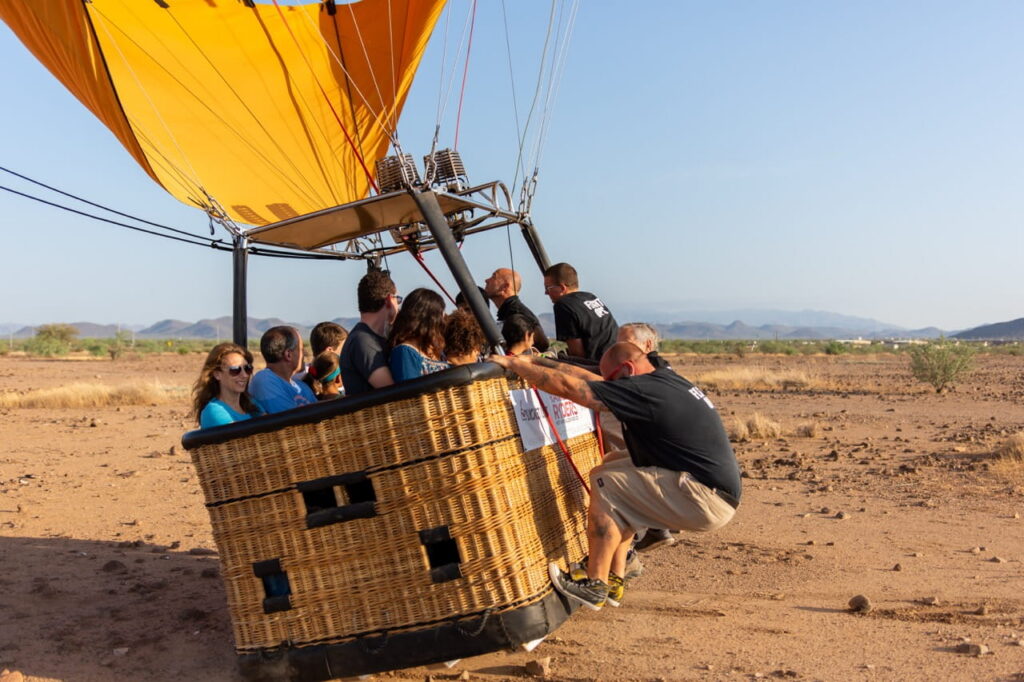
Comfortable closed-toe shoes are highly recommended. They help keep your feet warmer during cool morning launches while also providing better protection—the hot air balloon basket can put you close to other passengers who want to shift around to take in the view, making it important to protect your feet. Athletic shoes or hiking shoes also help people navigate uneven terrain during launch, landing, and walking through grassy or desert landing sites.
Skip Bulky Outerwear
Heavy winter coats are rarely necessary unless temperatures are especially cold on the ground already. Even then, most commercial hot air balloon ride operators recommend opting for multiple lighter layers instead, as they provide greater flexibility throughout the entire hot air ballooning experience, which isn’t just limited to being in the sky.
Dress Comfortably
Since you’ll spend the flight standing, it is important to wear comfortable clothing that allows for easy movement. You’re going to want to subtly move around to check out the view from different angles, and you won’t want restrictive clothes holding you back from getting the most breathtaking hot air balloon pictures.
How the Experience Changes Throughout the Year
Weather conditions naturally vary with the seasons, even in the desert areas of the American Southwest. The table below explains how each season may influence how the hot air balloon ride feels.
| Season | Typical Conditions | How to Prepare and What to Expect |
| Spring | Cool mornings, comfortable afternoons | Light layers are usually sufficient as temperatures warm after sunrise |
| Summer | Warm days, cooler early mornings | Sunrise flights help avoid the day’s highest temperatures, and airflow keeps the basket comfortable |
| Fall | Crisp mornings and mild afternoons | Widely regarded as one of the most comfortable seasons for ballooning, with stable weather and pleasant temperatures |
| Winter | Chilly mornings and clear skies | Dress warmly in layers, but expect periodic warmth from the burner and sunshine as the morning progresses |
Rainbow Ryders schedules sunrise balloon flights year-round in Albuquerque and Phoenix and from June through September in Colorado Springs and Park City. We also offer sunset hot air balloon rides in Albuquerque from November through January and in Phoenix from November through March.
How the Location Plays a Role
Rainbow Ryders operates in several unique regions, each with its own climate:
- Albuquerque often features cool mornings and sunny skies
- Phoenix offers comfortable sunrise conditions even during warmer months
- Colorado Springs typically experiences cooler mountain air
- Park City generally has the coolest temperatures due to its higher elevation
Checking the local forecast before your flight is always the best way to prepare.
Tips for First-Time Flyers
Now that you have a better idea of how cold a hot air balloon ride is, you can prepare with a few simple steps. Some things you should remember to help you stay comfortable are:
- Always check the weather forecast the evening before a flight
- Wear clothing appropriate for the ground temperature
- A light jacket and closed-toe shoes are some of the best things to bring on a hot air balloon ride
- Stay hydrated before arriving, especially for flights in warm weather flights
- Apply sunscreen, even on cool mornings
- Bring sunglasses to reduce glare after sunrise
Remember that personal comfort varies from one person to another. Some passengers naturally run warmer or cooler than others, making layers the easiest way to adapt.
Focus on the Experience, Not the Forecast
It is natural to wonder “how cold does it get in a hot air balloon?” However, most first-time passengers quickly discover that temperature becomes one of the least memorable parts of the experience—they remember the peaceful silence between burner blasts, the panoramic scenery stretching to the horizon, and the unique feeling of floating gently with the wind.
At Rainbow Ryders, every flight is planned with passenger comfort and safety in mind. Our experienced, FAA-certified pilots monitor weather conditions closely and operate during the times of day that offer the best combination of stability, visibility, and enjoyable temperatures.
If you’re ready to experience the beauty of ballooning firsthand, book your next flight with Rainbow Ryders. We’ll take care of the planning so you can focus on the breathtaking views and making unforgettable memories.