

Key Takeaways
- Hot air balloons’ peaceful, elevated perspective makes it possible to observe animal movement without the noise and barriers associated with many other forms of transportation.
- Early morning flights offer cooler temperatures and calmer winds that create favorable ballooning conditions, and these same conditions can coincide with increased wildlife activity.
- Rainbow Ryders operates in all four corners of the southwestern United States, giving passengers a chance to spot wildlife ranging from roadrunners and coyotes in the desert to elk and moose in the mountains.
- Wildlife sightings are never guaranteed, but bringing binoculars, keeping cameras accessible, and staying attentive can make an unexpected animal encounter one of the highlights of a balloon flight.
Hot Air Ballooning Is Great for Wildlife Viewing
One of the most unique aspects of hot air balloon baskets is the 360-degree perspective they offer while elevated in the air, allowing passengers to see more of the landscape than many other forms of transportation permit. Plus, hot air balloons travel at relatively low altitudes and speeds compared to airplanes, making it easier to admire intricate details, from river corridors and open grasslands to the animals moving through them.
Another reason hot air ballooning is good for wildlife viewing in particular is the fact that it is surprisingly quiet. Although the hot air balloon burner technology makes a sound when it sends bursts of heat upward, there isn’t the constant engine noise associated with airplanes, helicopters, or many ground vehicles, so you can remain attentive to what’s below.
Rainbow Ryders flies in the southwestern United States, which is arguably the most interesting place for wildlife viewing because its ecosystems vary dramatically across relatively short distances. The guide below can give you an idea of what you may see while riding with us and when the best time to fly is to boost your chances of a sighting.
Early Morning Flights Offer the Best Viewing Opportunities
Many commercial hot air balloon flights take place shortly after sunrise because this time usually offers cooler, more stable weather that is ideal for hot air ballooning. The same cool temperatures and calm winds that make early morning favorable for ballooning can also influence wildlife activity, especially in the desert where many animals seek shade or shelter from the heat as the day goes on. As the sun starts to heat the area, you might see a bird of prey riding a thermal or a group of deer browsing for leaves and fruits.
Still, pilots’ focus isn’t on what wildlife can be seen from the view of the hot air balloon; their priority is on safe flight conditions. Considering wild animals are unpredictable, and weather factors like wind and visibility can affect flight routes, wildlife sightings are never a guarantee on hot air balloon rides. However, when they do happen, they can feel incredibly special.
Exploring the Native Wildlife of the Southwest
Even though wildlife sightings should always be considered a possibility rather than a guarantee, you should learn about the animals local to the four locations Rainbow Ryders flies in, so you know what to look for when flying with us.
Animals You May See in Albuquerque
Albuquerque offers a particularly diverse setting for wildlife viewing because the city sits alongside the Rio Grande and its extensive bosque made of cottonwood trees, while the surrounding region transitions into high desert terrain and mountain landscapes.
This ecologically diverse part of New Mexico provides food and shelter for numerous species, including:
- Red-tailed hawks – These large birds of prey are widespread throughout the region and may be visible soaring above the landscape.
- Great blue herons – Their tall silhouettes can sometimes be seen near waterways and wetland habitats.
- Canada geese – These birds are common around suitable water sources and may be visible in or near the Rio Grande corridor.
- Coyotes – These adaptable mammals inhabit both desert and river environments throughout the area.
- Mule deer – These animals may occasionally appear in less-developed areas around the Albuquerque region.
- Sandhill cranes – Seasonal movements can bring these distinctive birds to the Rio Grande Valley, particularly during cooler months.
Although they are a bit smaller and usually stay on the ground, you may also spot roadrunners moving quickly across open terrain close to takeoff or landing, along with cottontail rabbits, as the open areas and vegetation around the bosque provide suitable habitat for these small mammals.
You may see some of these fascinating animals if you book a flight in Albuquerque!
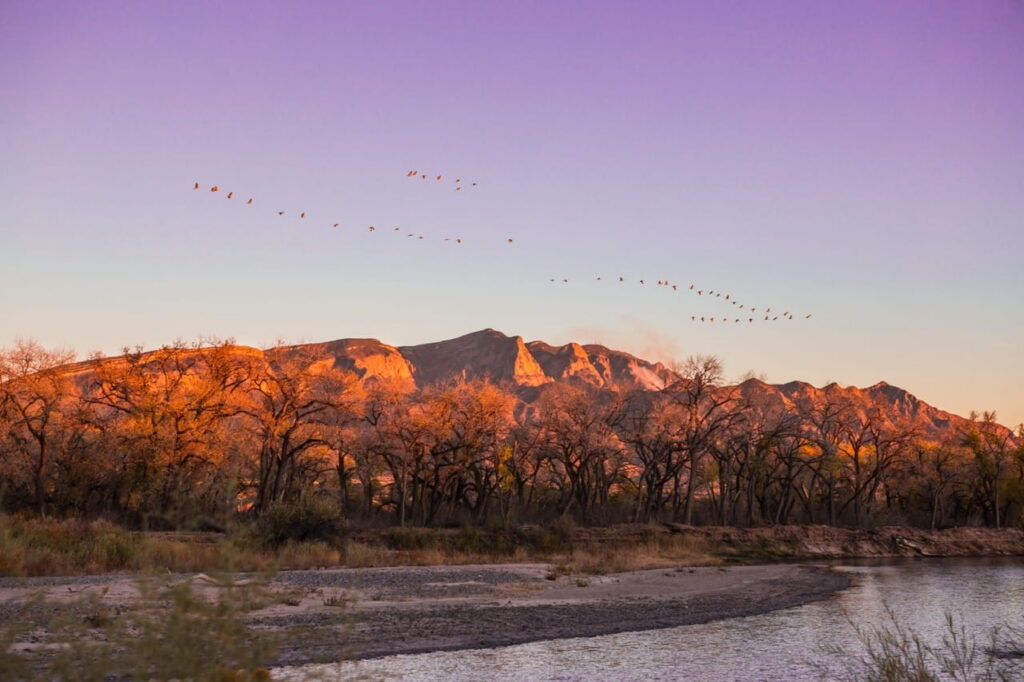
A migrating flock of Canada geese around sunset with the pink-tinged granite peaks of Albuquerque’s Sandia Mountains glowing in the background.
Fauna You May Find in Phoenix
Phoenix sits within the Sonoran Desert, which has an unusually diverse ecosystem for a desert, partially due to its two distinct rainy seasons. The desert washes and mountain preserves provide important habitat, and the area’s unique vegetation, like the towering saguaro cacti, creates shelter and food sources for numerous species.
During a hot air balloon flight in this part of Arizona, passengers may spot things like:
- Harris’s hawks – These social birds of prey are particularly characteristic of the Sonoran Desert.
- Coyotes – These wild canines inhabit a wide range of Sonoran Desert environments, including areas near developed communities.
- Javelinas – These distinctive, pig-like desert mammals may occasionally be spotted, especially on mountainsides.
- Wild burros – These small donkeys are usually much smaller than horses, but they have large heads and very long ears that make them easier to identify.
When you are at low altitudes, you may also see jackrabbits and desert cottontails hopping around. You may also spot some iconic, ground-dwelling and low-flying birds, such as the Gambel’s quail, roadrunners, and Gila woodpeckers.
Schedule a ride in Phoenix to see if you can spot any of these animals!
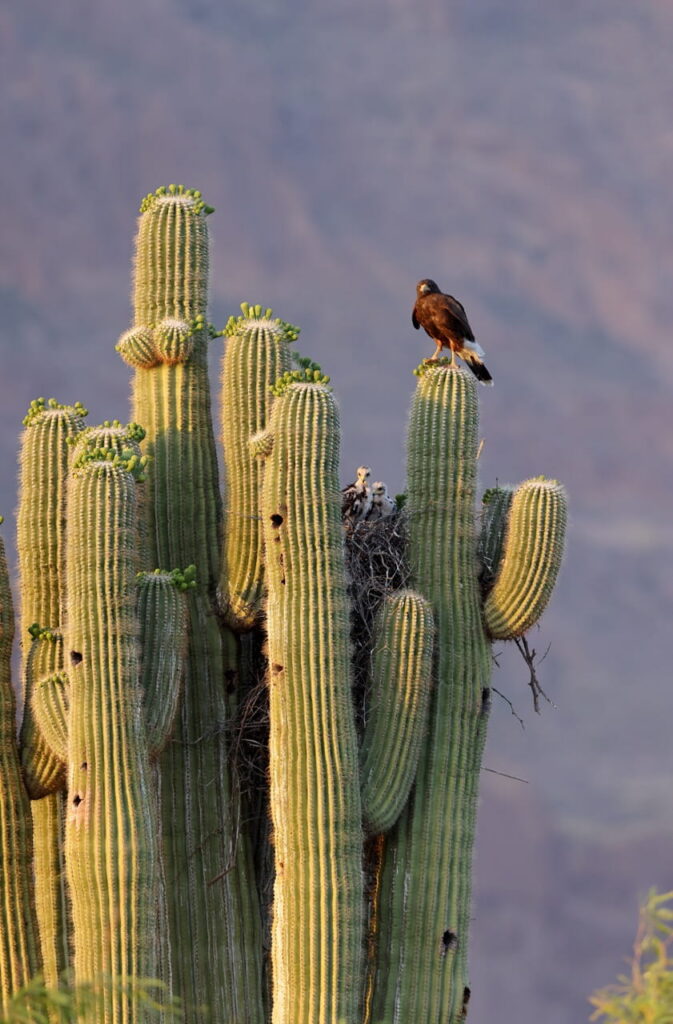
A Harris’s hawk mother watching over a nest full of chicks in one of Arizona’s iconic saguaro cacti.
Creatures You Could See in Colorado Springs
Colorado Springs offers a very different wildlife environment from Albuquerque and Phoenix. The region sits near the transition between the Great Plains and the Rocky Mountains, creating a combination of grasslands, foothills, open terrain, and dramatic mountain scenery. The open landscapes can sometimes make larger animals easier to spot from above, particularly when they are moving through grasslands or broad areas of undeveloped terrain.
Potential wildlife sightings in this part of Colorado include:
- Mule deer – These adaptable animals are common throughout Colorado and may be seen in open areas and foothill environments.
- Elk – Elk are among Colorado’s most recognizable large mammals and may occasionally be visible in suitable habitat.
- Pronghorn – Their preference for open grasslands makes them particularly interesting potential sightings from an elevated vantage point.
- Golden eagles – These large raptors can soar over open terrain and foothills.
- Red-tailed hawks – They are widespread and may be seen circling above fields and other open areas.
- Wild turkeys – These ground-dwelling birds can inhabit wooded and open environments.
The area is also home to wild canines like red foxes and coyotes, the latter of which commonly occupy grassland, foothill, and mountain environments in particular.
Secure a flight in Colorado Springs to give yourself the chance to see some of these animals!
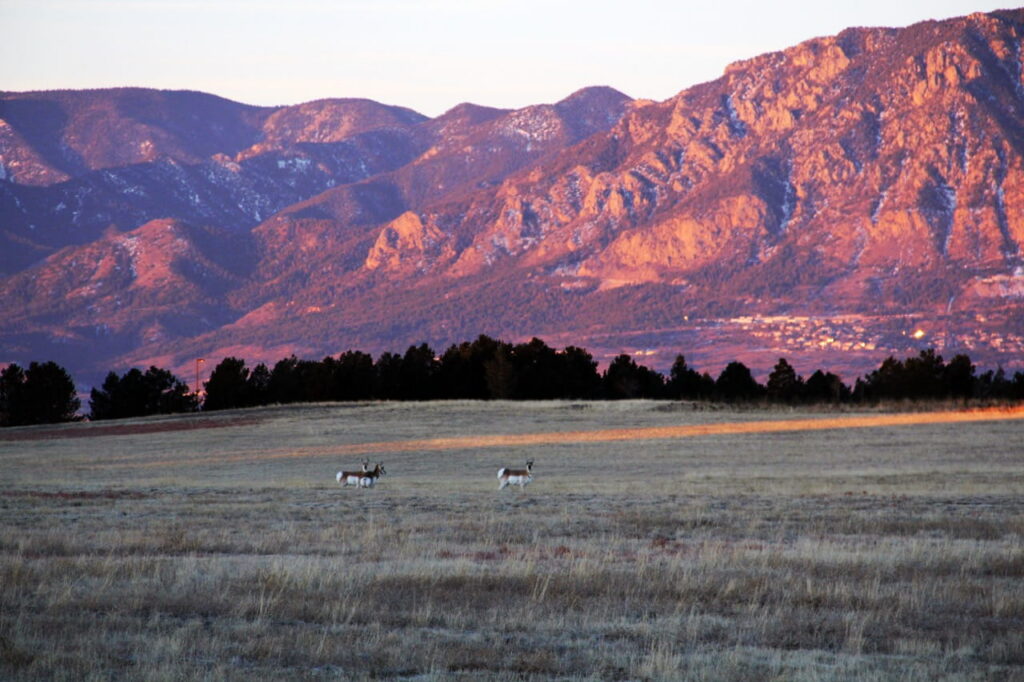
A small band of pronghorn deer grazing in an open grassland plain shortly after sunrise with Colorado Springs’s snow-dusted Rocky Mountains behind them.
Animals You May Spot in Park City
Park City is a higher-elevation environment with alpine forests, mountain valleys, and open slopes that supports wildlife that differs considerably from the desert species found farther south. Additionally, this region has frequently changing seasonal conditions that can have a particularly noticeable effect on wildlife activity—migration, changing vegetation, snow cover, and temperature all influence where animals spend their time throughout the year.
Depending on the time of year, some cool creatures you may see below you in this part of Utah include:
- Elk – Herds can inhabit Utah’s mountain environments and may occasionally be visible from above.
- Mule deer – These animals are widespread across Utah and use a variety of mountain and valley habitats.
- Moose – Moose may occasionally be spotted near suitable wetland or forested habitats.
- Red foxes – These adaptable predators can inhabit mountain environments and may be seen moving through open areas.
In addition to the list above, several hawk species inhabit Utah’s mountain and valley ecosystems. You may also see other popular types of raptors like the osprey, which is a fish-eating bird associated with lakes and other bodies of water, along with our national bird. The bald eagle can occasionally be seen seasonally around suitable waterways and open hunting areas.
Even if you don’t see any of the above-mentioned animals, Utah’s beautiful changing colors throughout the seasons are worth booking a flight in Park City!
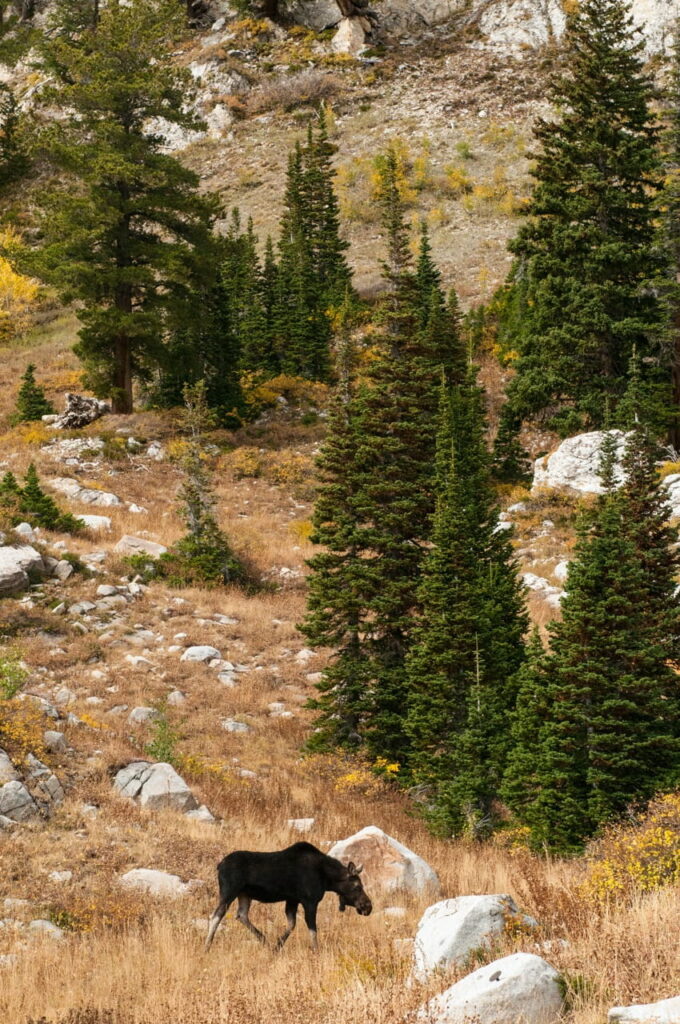
A Shiras moose walking through the rocky, grassy mountain landscape of the Uinta-Wasatch-Cache National Forest, which is directly adjacent to Park City.
Why Ballooning Offers a Unique Wildlife Perspective
Every method of exploring the outdoors comes with its own advantages. Hiking can bring you close to wildlife habitat, driving allows you to cover substantial ground, and aircraft can provide expansive views from much higher altitudes. Hot air ballooning occupies an unusual middle ground by keeping you high enough to see the landscape as a whole, but generally low enough to appreciate individual features across the terrain.
The table below breaks down the different ways you can view wildlife in the American Southwest.
| Experience | Wildlife Perspective | Potential Advantage |
| Hot air balloon | Elevated, panoramic, and relatively quiet | Broad views of habitats, trails, waterways, and animal movement at a pleasantly slow pace |
| Hiking | Ground-level and close-range, but it may be difficult to maintain an appropriate distance | Good for observing tracks, plants, and wildlife signs |
| Driving | Ground-level viewing from a moving vehicle with a semi-restricted view | Covers more distance and can access diverse areas |
| Airplane | High-altitude and distant with a heavily restricted view | Wide regional views but less ground-level detail |
| Helicopter | Elevated and highly maneuverable, but incredibly loud | Can access varied perspectives and hover over specific areas |
Wildlife Viewing Tips for Hot Air Balloon Passengers
You do not need specialized equipment to enjoy the possibility of seeing wildlife during a hot air balloon ride, but a few simple preparations can help, like:
- Bring compact binoculars to help examine distant areas
- Keep your phone or camera accessible in case wildlife appears unexpectedly
- Stay attentive and keep conversations at a reasonable volume
- Look in every direction to get an all-encompassing view of the land
Additionally, try your best to manage your expectations. A flight may produce several wildlife sightings, or you may spend the entire time focused on mountains, rivers, desert scenery, and the sunrise. Both outcomes are bound to be enjoyable.
Experience the Southwest From Above with Rainbow Ryders
From the Rio Grande Valley and high desert around Albuquerque to the Sonoran Desert surrounding Phoenix, the foothills of Colorado Springs, and the alpine terrain of Park City, Rainbow Ryders offers opportunities to experience four remarkably different landscapes from the sky.
There are no guarantees when it comes to wildlife sightings, and that uncertainty is part of what makes each flight unique. What you can count on when flying with us is an elevated perspective, panoramic views, and the opportunity to experience the Southwest in a way that few other forms of travel can provide.
For a once-in-a-lifetime experience, book a Rainbow Ryders flight in any of the four corners of the southwestern United States.