

Key Takeaways
- Long before scheduled flights, pilots and ground crew members start working together to assess conditions, prepare equipment, and ensure the launch site is ready for takeoff.
- Weather plays a central role in every hot air balloon ride, with factors like wind, visibility, and precipitation being factored into the preparation process and monitored during the flight.
- The hot air balloon ground crew helps with many essential tasks, including laying out and inflating the envelope, positioning the balloon, preparing the basket, and assisting with passenger boarding.
- Careful communication, inspections, and final checks help hot air balloon crews transition safely and efficiently from ground preparation to flight.
Flight Preparation Is More Thorough than Many Know
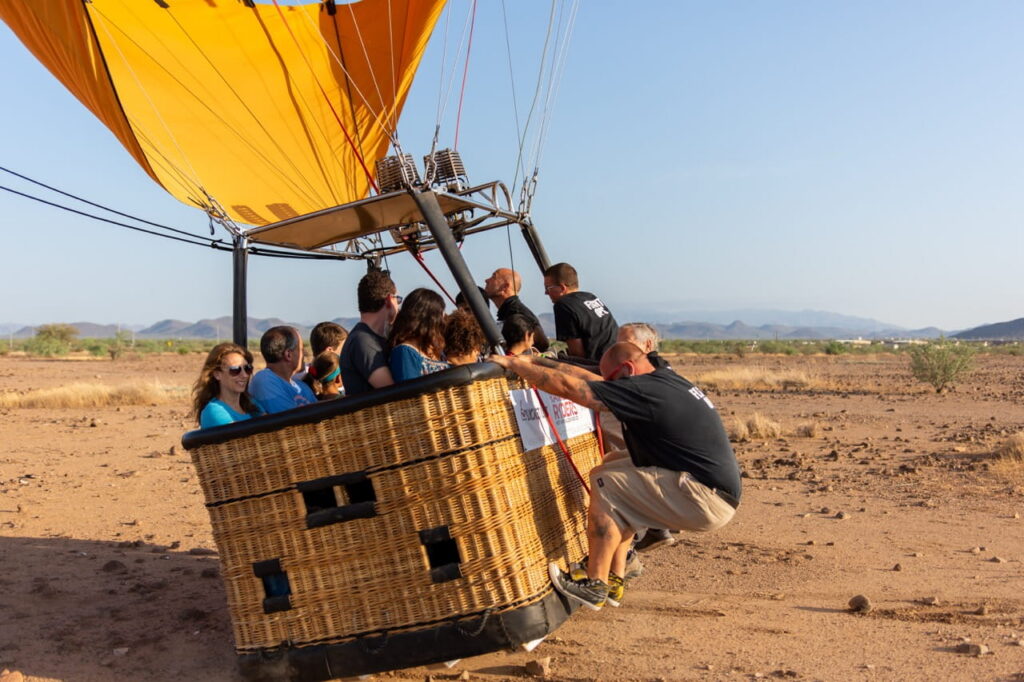
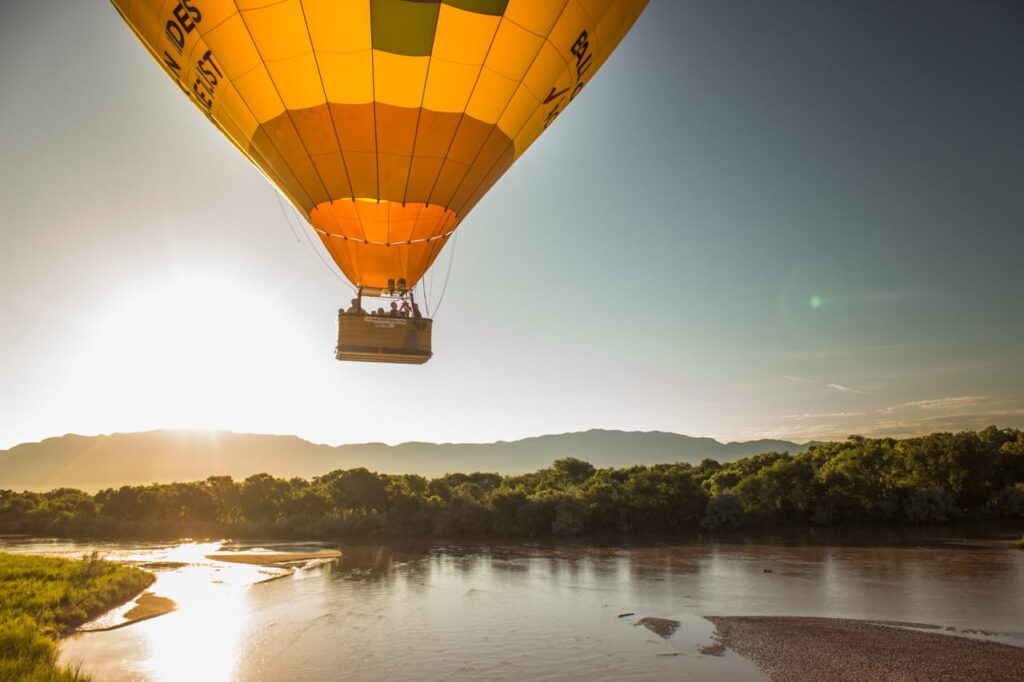
Most commercial hot air balloon flights are structured to be as simple as possible for the passengers. For example, Rainbow Ryders passengers meet their hot air balloon crew at one of our convenient starting points for check-in before getting driven to a more remote launch site nearby. Then, passengers can simply watch the hot air balloon ground crew inflate the balloon, climb into the basket, and start their bucket-list-worthy adventure floating above one of our four locations.
Behind that seemingly effortless experience, however, is a coordinated preparation process involving equipment inspections, weather assessments, and other thoughtful safety checks. Our pilots are responsible for making critical decisions about whether and how the flight will operate, while the ground crew supports with other aspects of preparation, like envelope inflation, basket positioning, and launch support.
The guide below further explains the preparation process for first-time passengers, so they can rest assured knowing that balloon flights are carefully planned and move at a deliberate pace.
Weather Determines Whether the Balloon Flies
Before the balloon equipment is prepared for launch, one of the most important questions must be answered: Are the weather conditions suitable for flight?
Hot air balloons are highly dependent on their environment. Unlike airplanes, balloons cannot simply accelerate through unfavorable weather or follow a predetermined route. Pilots rely on the atmosphere itself to carry and steer the hot air balloon, making wind and other weather conditions fundamental to the operation.
What Weather-Related Factors Are Incorporated into Planning?
To promote hot air balloon safety, pilots and crew members consider a wide range of weather-related factors, including:
- Wind patterns – Wind speed and direction near the surface and at different altitudes can affect both the balloon’s launch and eventual route.
- Visibility – Pilots need the view from the hot air balloon to be clear so they can maintain awareness of the surrounding environment and identify potential landing areas.
- Temperature – The difference in temperature between the ambient air and the inside of the fabric envelope is what causes a hot air balloon to rise—if it is too hot outside, convection can be hindered.
- Precipitation – Rain and other precipitation can affect balloon operations, predominantly by causing unstable weather patterns, potentially causing wind to kick up suddenly.
Weather can change between the initial forecast and the planned launch time, so weather assessment is treated as an ongoing process rather than a single decision made days or hours in advance. A flight that appears favorable on a forecast may still need to be canceled if weather conditions are unsuitable at the launch site on the day of the flight, making flexibility important.
Although rescheduling is understandably frustrating for passengers, Rainbow Ryders vows to always put safety first. When it is an appropriate time to fly, we promise to give you a fun, unforgettable experience.
Getting the Balloon and Equipment Ready
Once the pilot determines that conditions are ideal on the day of the flight, the crew can finish readying the aircraft and associated equipment.
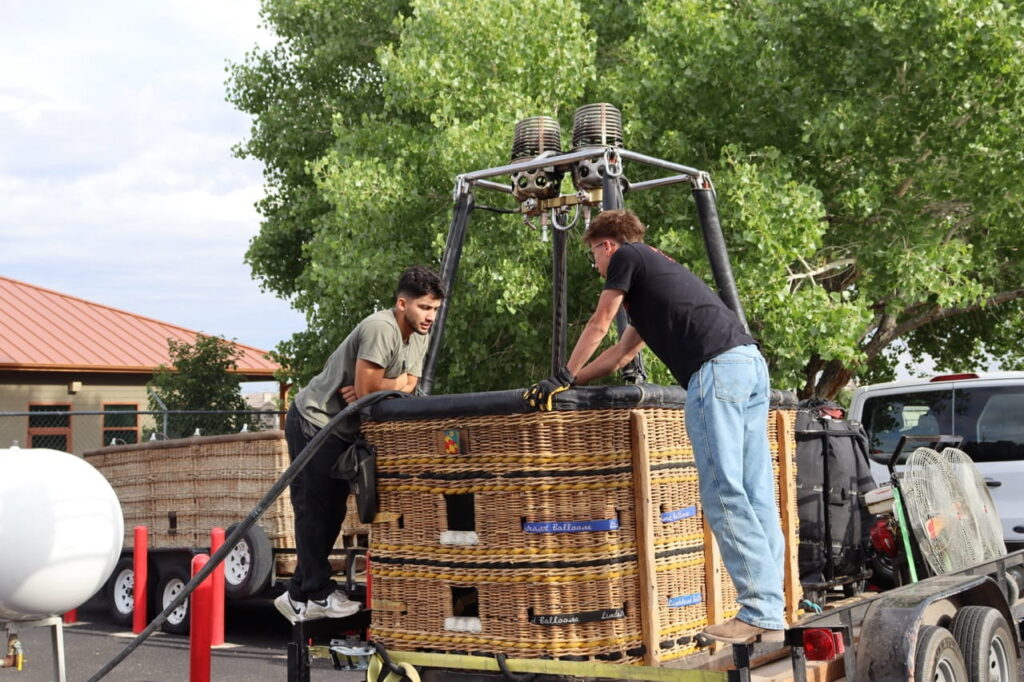
Hot air balloons are made of many parts that demand individualized attention. For example, the colorful envelope needs to be properly laid out, the basket and suspension system need to be checked, and the burner and fuel system must be prepared for operation.
What Is Inspected Before a Hot Air Balloon Ride?
The pre-flight process includes inspections of components like:
- The balloon’s fabric envelope
- Load tapes, seams, and other structural components
- The hot air balloon basket and suspension cables
- Burners, valves, hoses, fuel connections, and propane tanks
- The altimeter, variometer, temperature gauge, and fuel quantity gauges
- Safety equipment and the tools used to communicate with the hot air balloon chase crew
These checks are incredibly important and have enabled Rainbow Ryders to fly more than 750,000 passengers since 1983 without any major injuries or fatalities from balloon malfunctions.
The Crew’s Role in Balloon Inflation
One of the most recognizable parts of flight preparation is inflation. This is when the balloon transforms from a collection of fabric gores on the ground into the colorful aircraft the passengers will soon ride.
The process normally follows these five steps:
- The envelope is laid out across the launch area
- The crew carefully positions the fabric and connects the necessary components
- A fan is then used to push cool air into the envelope, causing it to expand gradually
- As the envelope takes shape, the burner is used to heat the air inside and generate the lift needed to bring the balloon upright
- As the balloon stands up, the crew continues to manage its position until it is time for flight
This stage requires close coordination between the pilot and the hot air balloon ground crew—crew members may hold, guide, or reposition components while the pilot controls the burner technology and monitors the balloon’s movement.
Rainbow Ryders passengers are often invited to help with the inflation process if they are interested in becoming a temporary part of the crew. Otherwise, they can simply watch in fascination and listen to the sound of the inflation fan, the occasional roar of the burner, and the instructions exchanged between crew members.
The Final Checks Before Takeoff
Once the envelope is properly inflated and the passengers have gotten into the hot air balloon basket, the preparation may look complete to passengers. However, the pilot and crew must still perform final checks to confirm that the aircraft and launch area are truly ready for takeoff.
These final assessments are designed to answer questions like:
- Are the burners and their controls operating correctly?
- Are the fuel connections secure, and is there enough propane available?
- Is the aircraft positioned in a way that supports the planned route?
- Is the passenger load properly spread out, and is it a safe weight for flight?
- Are the surrounding launch conditions safe?
- Can the pilot and crew effectively communicate with their tools?
These final checks help ensure that the balloon is ready to transition from a stationary aircraft on the ground to an aircraft in flight.
Pilots and Ground Crew Work as a Team
Although the pilot is ultimately responsible for operating the balloon and making flight-related decisions, a hot air balloon flight depends on teamwork, as the hot air balloon chase crew provides essential support throughout the process.
Some things the ground crew may help with:
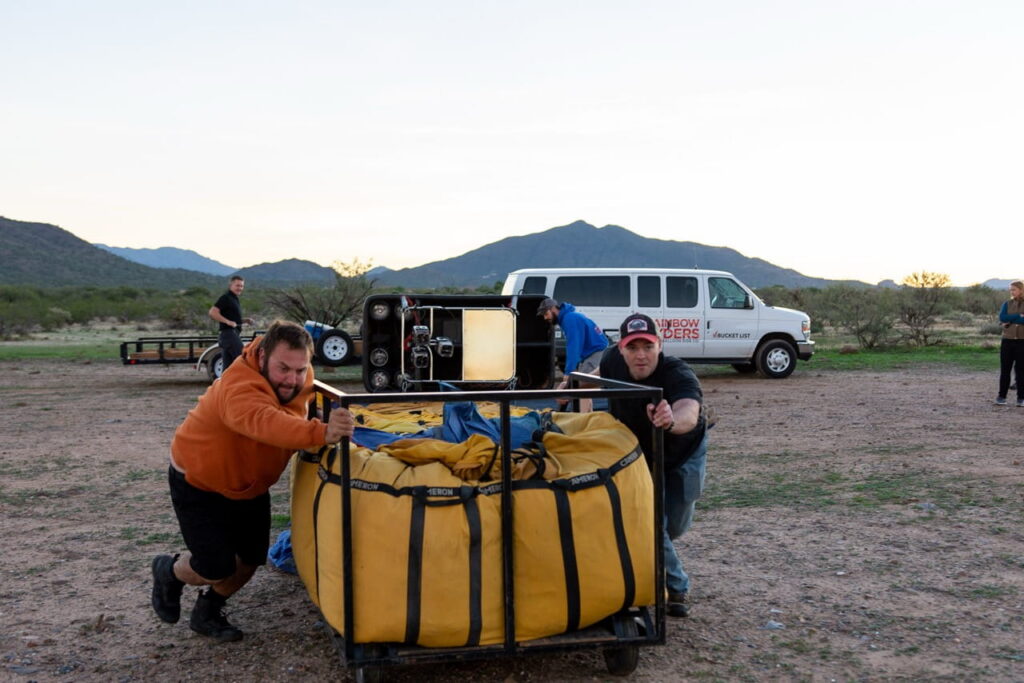
- Transporting and positioning equipment
- Laying out the envelope, operating the inflation fan, and managing the balloon during inflation
- Preparing the basket and fitting everyone into the hot air balloon
- Supporting launch procedures
- Following the balloon after takeoff and assisting with landing and post-flight procedures
Communication is central to the pilot and crew members’ relationship. It is essential for both parties to understand what is happening around the balloon, how conditions are changing, and what to expect during the landing.
What Does the Ground Crew Do During and After the Flight?
After helping with the launch, the chase crew follows the hot air balloon by vehicle, using the flight’s progress, changing conditions, and pilot communication to estimate where the balloon will eventually land.
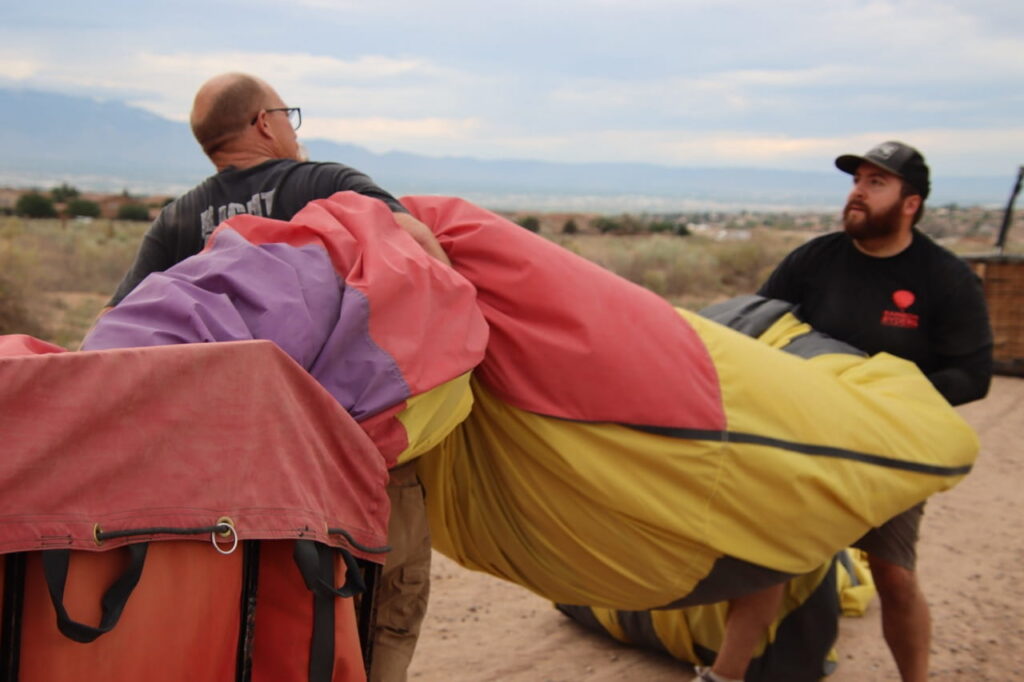
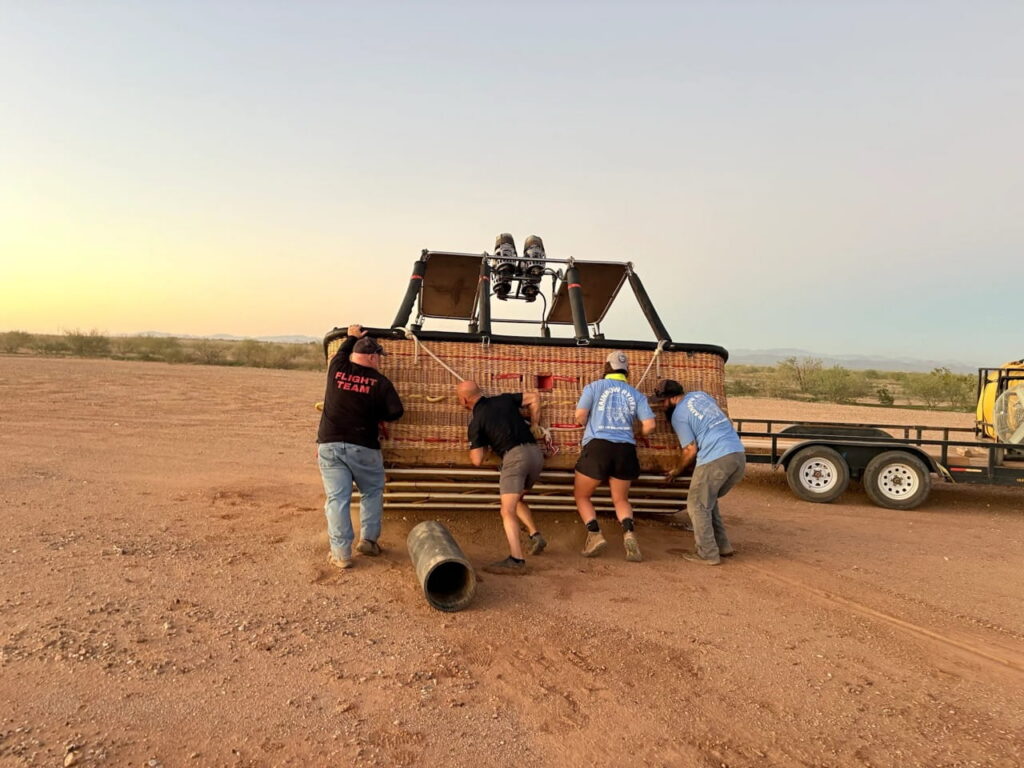
After touchdown, these ground crew members help with the landing process, passenger exit, and balloon recovery. They play a critical role in folding the once-billowing fabric back up and loading it into the transportation vehicle. They also move the rather heavy hot air balloon basket into position on its trailer bed.
From Ground Preparation to Takeoff
The journey from a packed balloon to a fully operational aircraft involves far more preparation than most first-time passengers realize, from weather assessment to the meticulous preparation of the envelope, basket, burner, fuel system, and other equipment.
At Rainbow Ryders, experienced pilots and dedicated ground crews work together to make each flight safe, organized, and memorable. We handle most of the important work before passengers step into the basket. Our focus on intentional preparation is part of what allows the actual flight to feel so calm and seamless for the people we fly around the Southwestern United States.
Book a hot air balloon flight with Rainbow Ryders today, and you can leave the technical stuff to our professionals while you focus on the once-in-a-lifetime aerial views of Albuquerque, Colorado Springs, Phoenix, or Park City.