

What Is the Temperature Inside a Hot Air Balloon?
Jun 29, 2026
Executive Summary
- The air inside a hot air balloon’s envelope usually needs to be heated to at least 100°F above ambient air temperature to generate lift. It may reach 200°F–225°F while climbing, but hovers around 190°F–215°F while cruising.
- Although brief bursts from the burner create momentary warmth, the open-air basket design allows constant airflow, making the ride feel more like standing outdoors than in a heated space.
- Since the envelope’s trapped heat remains safely above the passenger, ambient weather conditions and altitude have a much greater impact on passenger comfort.
- Dressing in layers and preparing for seasonal weather helps ensure a comfortable and enjoyable hot air balloon experience.
Why Temperature Feels Different Than You Expect
Since hot air balloon passengers have to stand in close proximity to the burner, many assume the experience must be extremely hot. In reality, most passengers are surprised by how comfortable a hot air balloon ride feels.
Even though hot air balloons rely on heated air to rise, heat is directed into the enormous envelope above the basket rather than toward the passengers. They may still feel brief moments of warmth whenever the burner is activated, but those bursts are temporary and quickly offset by natural airflow.
Passengers also don’t have to worry about wind chill, since they’ll be moving harmoniously with the wind. As a result, the sensation of riding on a hot air balloon is often very similar to standing outside on the ground, regardless of wind speed or what the temperature is inside a hot air balloon envelope.
Still, factors such as the season, time of day, cloud cover, wind conditions, and altitude can impact comfort. The guide below can help prospective passengers understand how balloon temperature works, so they have the peace of mind needed to focus on enjoying the breathtaking views.
How Hot Is the Air Inside a Hot Air Balloon?
The air inside the hot air balloon’s envelope, the billowy fabric above the basket, must be significantly warmer than the surrounding atmosphere to create lift, usually by about 100°F. However, the specific temperature depends on the phase of flight. For example, takeoff requires hotter temperatures than what should be expected during landing.
The table below is intended to give you an idea of how hot the air inside a hot air balloon is at different stages of flight, though these values can vary depending on the flight conditions.
| Phase of Flight | Typical Envelope Temperature | Purpose |
| Cold inflation/takeoff | Ambient temperature + 100-130 degrees | Creates enough lift for takeoff and initial ascent |
| Climb to Cruising Altitude | 200°F–225°F | Additional heat helps the balloon gain altitude efficiently |
| Cruising Flight | 190°F–215°F | Pilot maintains a stable temperature to sustain level flight |
| Descent Preparation | 170°F–190°F | Reduced heating allows the air inside the envelope to cool gradually |
| Landing/deflation | Ambient temperature + 100-130 degrees | Continued cooling decreases lift and enables a controlled touchdown |
While the numbers in the table above may sound intense, it’s important to remember that passengers are not inside the envelope itself.
Why Envelope Temperatures Don’t Affect Passengers
The heated air rises naturally toward the top of the balloon, where it remains trapped beneath the crown. The hot air balloon basket is suspended well below this heated air mass, creating substantial distance between passengers and the hottest part of the aircraft. This means passengers are never exposed to the full temperature inside the balloon.
It will feel more like the outdoor temperature you felt on the ground, with occasional warmth from the burner, which is used intermittently. The burner only needs to heat the air enough to make it less dense than the surrounding atmosphere. Once sufficient lift is generated, the balloon can continue flying smoothly—from there, the pilot will only occasionally activate the burner to manage the envelope temperature carefully.

How the Burner Affects Temperature
A hot air balloon’s burner is at the heart of every flight. Many people already know that the burner generates the thermal energy needed to control altitude throughout the flight; however, the burner’s influence on passenger comfort is often misunderstood.
When the pilot activates the burner, a powerful flame shoots upward into the envelope. Most passengers will notice a warm sensation when this flame is above them, especially when the weather is cooler, but this warmth is fleeting.
What Prevents Excessive Heat Buildup?
Three of the main factors that help prevent excessive heat buildup are:
- Burner blasts are short and intermittent
- Heat rises into the envelope rather than remaining in the basket
- The basket remains open to outside air, allowing natural airflow to disperse warmth quickly
Therefore, many first-time flyers report feeling cooler than expected, especially if they have taken a sunrise flight, as ground temperatures are already low at that time.
Open-Air Design and Natural Airflow
As mentioned in the three-part list above, one of the biggest reasons balloon rides remain comfortable is their open-air design.
Hot air balloon parts differ dramatically from those of an airplane cabin. There are no floor-to-ceiling walls, roof, windows, or climate-control systems. The basket is fully exposed to the environment, allowing fresh air to circulate freely throughout the flight and preventing heat from accumulating around passengers.
When the flight takes place at sunrise or sunset, the combination of fresh air and elevation often leads many guests to compare the experience to standing at a scenic overlook or taking a walk outdoors.
How Altitude Impacts Temperature
The altitude of a hot air balloon plays an important role in determining how comfortable the ride feels because air temperature generally decreases as elevation increases. Meteorologists often estimate that temperatures drop roughly 3.6°F for every 1,000 feet of altitude gained in the troposphere, the layer of Earth’s atmosphere that hot air balloons fly in, because the atmosphere is primarily heated from below, and air expands as it rises.
With less heat radiating from the ground, passengers may notice subtle temperature changes as their hot air balloon climbs, especially if it is a sunset flight and the landscape is already cooling down. This is one reason pilots frequently recommend dressing in layers—having the flexibility to adjust clothing can improve overall comfort.
What to Wear for a Comfortable Flight
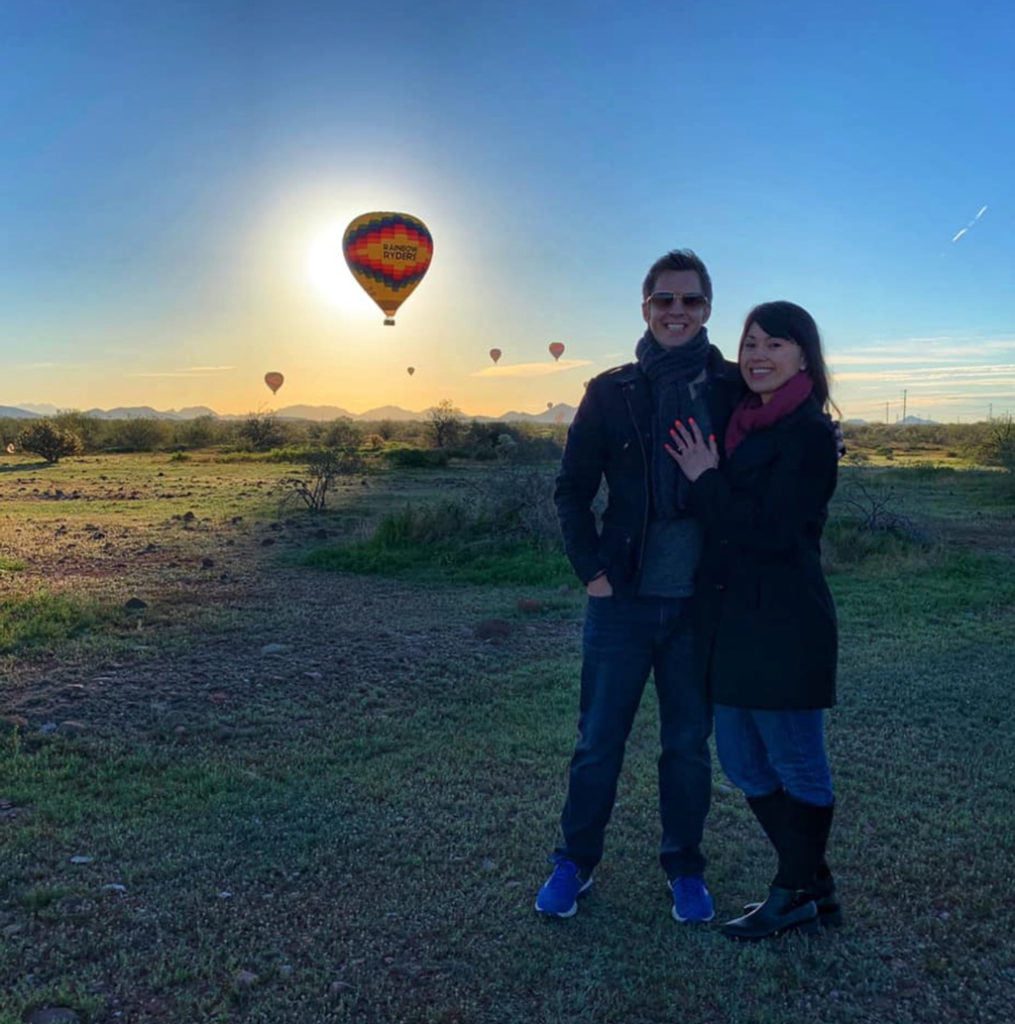
Understanding what the temperature feels like during a hot air balloon flight can help you prepare for your first ride. A good rule of thumb is to dress for the weather conditions on the ground. Since hot air balloons don’t experience wind chill and passengers are shielded from the heat trapped in the envelope, what feels comfortable outdoors will usually feel comfortable in the air as well.
Still, it is important to follow the practical recommendations mentioned below.
Dress in Layers
Layering allows you to adjust to changing temperatures since they can easily be removed if temperatures warm up. Some examples of appropriate layerable clothing include:
- Lightweight jackets
- Fleece pullovers
- Long-sleeve shirts
- Light sweaters
Wear Closed-Toe Shoes
Not only does closed-toe footwear promote hot air balloon safety, but it can also keep your feet warm, which is important since they are the farthest part of your body from your heart and often experience reduced blood flow. Some good shoe options include:
- Athletic shoes
- Hiking shoes
- Casual walking shoes
Make sure you avoid sandals, high heels, or shoes with limited support.
Choose Comfortable Clothing
Balloon flights don’t require specialized gear, so you won’t need a harness or helmet. One of the few things you need to bring is comfortable outdoor clothing, such as:
- Loose jeans
- Athletic pants
- Shorts during warm weather
- Casual shirts
- Light jackets
The goal is to remain comfortable while standing in the basket and during launch and landing procedures.
Seasonal and Weather Considerations
The temperature inside a hot air balloon can also vary with the season and local weather conditions. Read through the considerations in the table below to better understand which season offers the best weather for hot air ballooning in the southwestern United States and how to adapt your clothing for each season.
| Season | Typical Temperature Profile | Flight Characteristics | Clothing Recommendation |
| Spring | Cool mornings and comfortable daytime temperatures |
|
Wear layers that can be added or removed as conditions warm throughout the morning |
| Summer | Warm overall temperatures with cooler conditions before sunrise and at max altitude |
|
Lightweight, breathable clothing with a light layer for early morning launch times |
| Fall | Crisp mornings and mild afternoons |
|
Layered clothing that provides warmth early and comfort as temperatures rise |
| Winter | Cold temperatures, especially before sunrise |
|
Warm layers, a jacket, and closed-toe shoes to stay comfortable throughout the flight |
Other Factors That Influence Temperature
Three additional weather variables that can also affect how the temperature inside a hot air balloon feels to passengers are:
- Cloud cover – Overcast conditions may feel cooler because less sunlight reaches passengers, and ground temperatures may be lower since less solar warmth reaches the ground.
- Humidity – Higher humidity may make warm conditions feel slightly warmer, while dry desert air often feels more comfortable even when temperatures rise.
- Local geography – Desert regions offer warm days but cool mornings; mountain regions offer cooler temperatures at elevation; river valleys often have higher humidity; and high-altitude areas offer cooler overall conditions.
As to the last point, these regional variations contribute to the unique character of each balloon flight, meaning different flight locations produce different experiences.
A Comfortable Way to Experience the Sky
Remember, the temperature of the air inside a hot air balloon doesn’t directly translate to what passengers feel during the ride—while the air inside the envelope may reach temperatures exceeding 200°F, that heat remains above the basket where it generates lift. Most passengers would agree that weather conditions, clothing choices, and the time of year have a greater influence on comfort than the burner itself does, since brief bursts of warmth from burner blasts are balanced by fresh outdoor air.
At Rainbow Ryders, our FAA-certified pilots carefully monitor weather conditions to ensure every flight is conducted safely and comfortably. Whether you’re soaring above the Sonoran Desert, the Rio Grande Valley, the Rocky Mountains, or the Wasatch Range, you’ll discover that a hot air balloon ride offers one of the most relaxing ways to experience the sky.
If you are ready to experience it for yourself, book your flight today in one of the four corners of the southwestern United States and discover just how comfortable ballooning can be.