

Can Hot Air Balloons Fly at Night? What to Know
Jan 6, 2026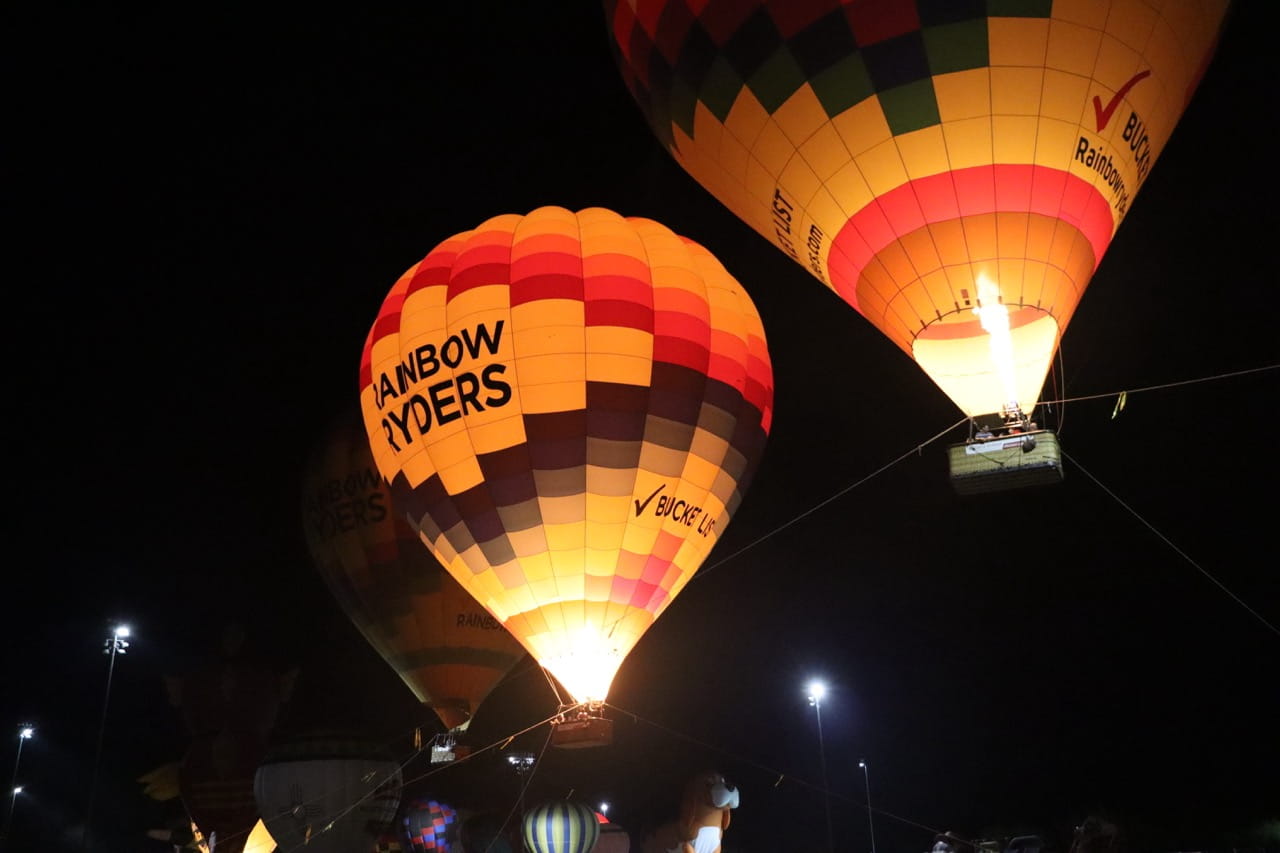
Key Takeaways
- Even though hot air balloons can fly at night with special equipment, most commercial rides occur between sunrise and sunset to ensure safety, visibility, and weather stability.
- By improving visibility, flying during daylight can help pilots navigate, assess landing zones, and respond safely to changing conditions.
- Hot air balloon glows are popular alternatives to traditional nighttime flights, where balloons remain securely anchored to the ground while the burner’s flame lights up their billowing envelopes.
- No matter the time of day, commercial hot air balloon operators must prioritize FAA regulations, pilot expertise, and optimal flight conditions to ensure every experience is safe and enjoyable.
Why Night Ballooning Raises So Many Questions
Since the beginning of hot air ballooning, one of the most common questions passengers ask when planning a ride is “Do hot air balloons fly at night?” However, the answer to that question can be complicated, because technically, hot air balloons can fly at night, but doing so requires additional lighting and safety precautions to maintain visibility.
Unlike airplanes or helicopters, hot air balloons rely almost entirely on atmospheric conditions and visual awareness, making the time of day critical to ensuring flight is as predictable, safe, and enjoyable as possible. So, even though commercial hot air balloon operators can still fly high after sunset, such flights are highly regulated and therefore rarely performed.
As a popular alternative, many hot air balloon festivals feature glow events, where the balloons stand up without floating away, creating an awe-inspiring light show for attendees. Read through the guide below to learn about hot air balloon glows and why most traditional flights occur around sunrise and sunset. Doing so can help set realistic expectations and build appreciation for the skill and safety planning involved.
The Sunrise and Sunset Rule
Hot air balloon flights are often scheduled shortly after sunrise or just before sunset. These are the best times of day for a hot air balloon flight because of the safety and predictability they offer. During these times, the atmosphere is typically calm, winds are gentle and consistent, and thermal activity is minimal. Plus, visibility is beyond sufficient.
There are some exceptions in which hot air balloons can fly at night, but they must be equipped with specialized lighting to comply with Federal Aviation Administration (FAA) guidelines. Therefore, standard passenger-carrying balloon flights are typically not conducted after dark. This approach is widely accepted across the commercial hot air ballooning industry and reflects operators’ safety-first mindsets.
Sunrise and Sunset Offer the Optimal Atmosphere
A primary reason early morning and late evening hot air balloon flights are the industry standard is that they offer atmospheric advantages that make it easier to control direction and descent, such as:
- Cooler air temperatures that improve lift efficiency
- Less thermal turbulence from solar heating
- Slower, steadier surface winds that facilitate controlled landings
As the sun rises higher or fully sets, the temperature is bound to change, and wind behavior can become less predictable, demanding more adjustments from trained pilots.
Daylight Increases a Pilot’s Visibility
Beyond offering more stable weather suitable for hot air ballooning, flying right after sunrise or right before sunset provides pilots with enough daylight for visual navigation. Some reasons why pilots must maintain constant visual awareness are:
- To identify power lines, trees, towers, and buildings
- To accurately judge altitude, speed, and descent rate
- To select safe landing zones and adjust toward them well in advance
Using the visual cues mentioned above is fundamental to hot air balloon safety, and they can be significantly reduced or lost after dark; this is why true nighttime flights are rarely part of commercial hot air ballooning.
Unique Challenges of Flying After Dark
Nighttime hot air balloon flights pose distinct challenges that often outweigh the benefits for most commercial operations. Nevertheless, with modern instruments and experienced pilots, the challenges mentioned below can still be overcome.
Loss of Visual Reference
Even though hot air balloon pilots have tools to help, they still rely heavily on visual input. Some things that may get more challenging to judge without natural light are:
- Height above ground
- Forward speed
- Rate of descent
This is because depth perception is reduced, shadows disappear, and terrain features blend together at night. These factors increase operational risk, especially during landing, considering that balloons move more slowly than airplanes and respond more gradually—early visual awareness is critical.
Navigation Becomes More Complex
During daytime flights, pilots use a combination of instruments and visual landmarks, such as roads, fields, buildings, and terrain, to maintain situational awareness. At night, those landmarks are often obscured.
Relying solely on instruments changes the nature of hot air balloon flight. While instruments provide valuable data, they shouldn’t fully replace the nuanced judgment of trained pilots seeing the environment in real time.
Wind Behavior Is Harder to Monitor
After sunset, temperatures can drop, and wind layers may behave differently than initially forecasted. The subtle changes in wind speed and direction are more difficult to detect without visual confirmation from surface indicators such as trees, smoke, or water movement.
For a form of aviation that depends so heavily on reading the air, this lack of visibility adds unnecessary uncertainty that can complicate flight.
Understanding the Balloon Glow Phenomenon
While high-flying flights usually don’t occur at night, there is a way to experience hot air balloons after dark, and it’s one of the most visually stunning events in aviation.
The Nighttime Exception
If you have seen a picture of hot air balloons lighting up a darkened field at night, chances are you were looking at a hot air balloon glow. These events tap into the awe of traditional nighttime flights, but function entirely differently.
A hot air balloon glow is a ground-based event in which balloons remain securely anchored by heavy-duty lines that restrict vertical movement, allowing pilots to use their burners in short bursts without lifting off.
Since the balloons are not airborne, glow events are better classified as illuminated displays rather than flight operations.
A Visual Spectacle
As several burners ignite, vibrant balloon envelopes light up against the night sky, creating a breathtaking scene. For an extra layer of enjoyment, many glows are synchronized with a dedicated MC, with pilots firing burners in a synced-up rhythm, turning the event into a choreographed light show.
Hot air balloon glows are often considered the safest and most practical way to enjoy hot air balloons at night, which is why they have become a beloved tradition at many large hot air balloon festivals in the U.S.
FAA Regulations for Night Operations
All aircraft in the United States, including hot air balloons, operate under FAA regulations to standardize safety across all forms of aviation. Read through the considerations below to understand how FAA regulations impact night operations for hot air balloon operators.
Civil Twilight Explained
FAA guidelines distinguish between daylight, civil twilight, and nighttime operations. Civil twilight is the period shortly before sunrise and after sunset when some natural light remains.
Most balloon flights are conducted during daylight or civil twilight windows, so pilots have the visibility needed to navigate safely and to know what to expect during landing.
Why Glows Are Different
Since hot air balloon glows feature stationary balloons on the ground instead of high-flying flight, they are classified differently. Accordingly, these events bypass some of the complex regulatory requirements and dangers associated with hot air ballooning at night. In turn, guests can safely enjoy the visual magic of illuminated balloons without the complications of nighttime flight.
Experience a Sunset Flight or Balloon Glow with Rainbow Ryders
At Rainbow Ryders, safety is always at the forefront of our minds; it’s the foundation of every decision our team makes. That’s why our flights are scheduled during optimal daylight windows and conducted by experienced, FAA-certified pilots who understand both the art and science of ballooning.
At all times, Rainbow Ryders adheres strictly to FAA regulations and relies on time-tested practices. So, passengers can rest easy knowing that every flight will take place under favorable weather, visibility, and wind conditions.
Rainbow Ryders offers a wide selection of flight times. Consider booking a sunset flight for a late-afternoon experience or checking out a balloon glow at one of the festivals we attend for nighttime fun.
Additionally, if you have any lingering questions surrounding the timing of hot air balloon flights, contact our team for more information. Our ballooning professionals will be happy to enlighten you!