
What Is the View Like from a Hot Air Balloon?
Jun 23, 2026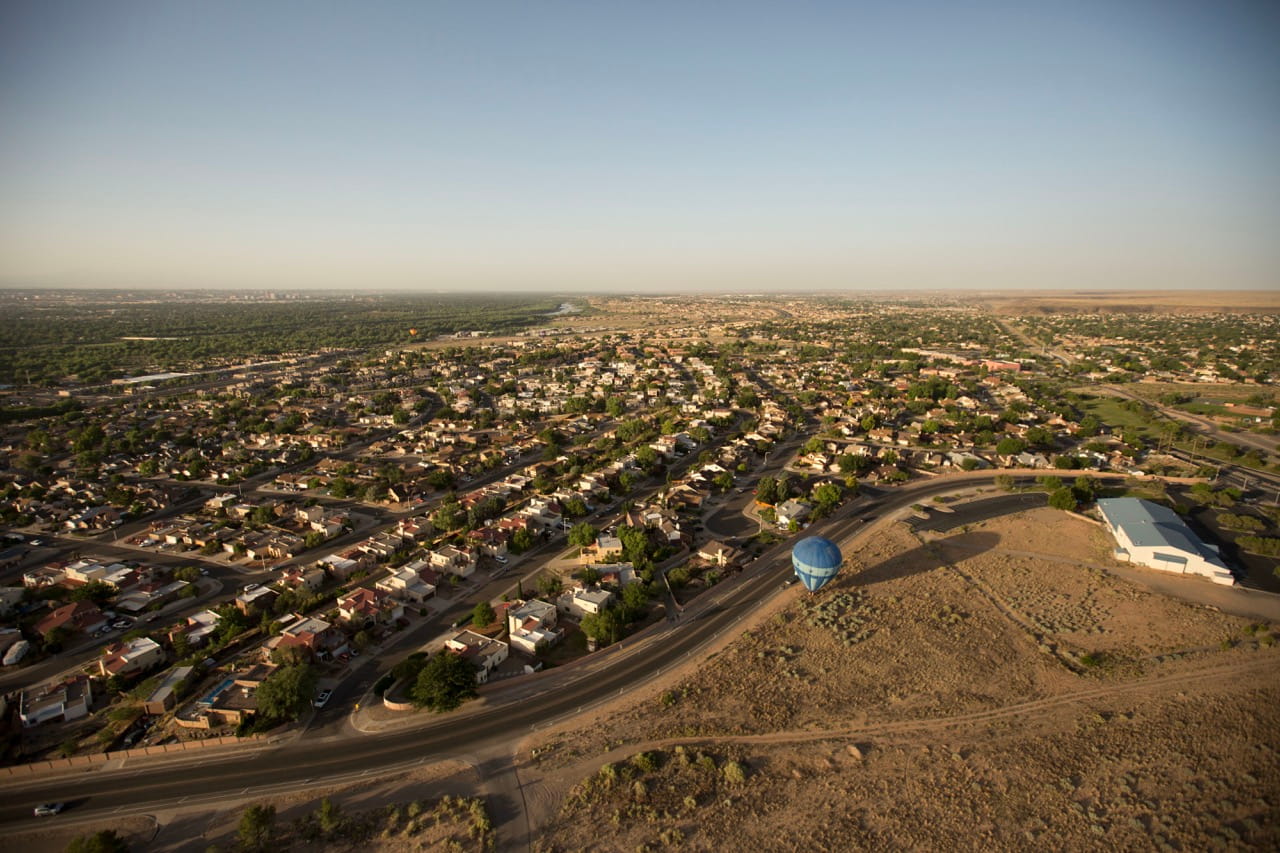
Key Takeaways
- The view from a hot air balloon offers unobstructed 360-degree panoramas that are impossible to experience from most other forms of transportation.
- Because balloons fly at relatively low altitudes, passengers can appreciate both sweeping landscapes and fine details on the ground below.
- If you take a sunrise flight, you’ll notice vibrant colors and dramatic shadows as the lighting conditions change, which can enhance the scenery throughout the journey.
- Rainbow Ryders flights showcase a variety of landscapes, including Albuquerque’s desert valleys and mountains, Phoenix’s Sonoran Desert, Colorado Springs’ Rocky Mountain scenery, and Park City’s alpine terrain.
A Perspective You Don’t Get Anywhere Else
Most people have seen a hot air balloon while looking up from the ground, which can be a beautiful sight in and of itself, thanks to the colorful fabric and fairy-like weightlessness. Nevertheless, the view from inside hot air balloons takes the magic a step further.
Anyone who has been in a hot air balloon knows the view from the basket is bucket-list-worthy. It gives you an impressive vantage point that only aircraft can reach, but without any of the obstructions you may be used to. Unlike airplanes, there are no cabin walls, windows, wings, or engines separating you from the environment. Instead, hot air ballooning offers an immersive aerial experience in which passengers float gently above the landscape, with uninterrupted views in every direction.
The experience can feel both expansive and personal at the same time, especially since every ride is unique. The location, time of day, and altitude can all affect the view from a hot air balloon. Read through the guide below so you’ll know what to expect from this once-in-a-lifetime sightseeing experience.

Panoramic Views in Every Direction
One of the defining characteristics of a hot air balloon ride is the complete lack of a designated viewing direction. There are no front or window seats—you don’t have to race to secure a specific side of the aircraft because every position in the hot air balloon basket offers remarkable views.
You’ll be able to see the land stretch out in every direction, creating a true 360-degree panorama. As the balloon drifts with the wind, chances are you’ll be rotating your attention from one horizon to another as you take it all in and snap pictures for later. In addition to looking outward, you can also look downward, as you can safely peer over the side of the basket without obstruction.
What Do You See From Inside a Hot Air Balloon Basket?
Depending on the location, the landscape may include things like:
- Mountain ranges
- Desert terrain
- Rivers and lakes
- City skylines
- Forests
- Farmland or open valleys
Again, many guests find themselves constantly turning to take in new scenery. A mountain range may dominate one side of the flight while a sprawling valley unfolds on the opposite horizon.

Floating at Low Altitudes for Better Detail
People often assume that flying as high as possible automatically provides better views. In reality, one of hot air ballooning’s greatest advantages is that it operates much lower than commercial airplanes, which typically cruise at altitudes between 30,000 and 42,000 feet. In comparison, most commercial hot air balloons usually stay between 1,000 and 9,000 feet.
This lower altitude dramatically changes what passengers can see. Rather than viewing landscapes as distant shapes and colors, passengers can observe remarkable detail from above.
The View From a Hot Air Balloon vs. a Plane
Although visibility depends on many factors, the table below will give you a better idea of what may be visible from a hot air balloon but not from an airplane flying at a significantly higher altitude.
| Feature | Hot Air Balloon
(Typically 1,000–9,000 ft) |
Commercial Airplane
(Typically 30,000–42,000 ft) |
| Large Individual Trees | Clearly visible, including shapes, spacing, and forest patterns | Generally indistinguishable from surrounding vegetation |
| Wildlife | Possible to spot larger animals and wildlife movement | Not visible from cruising altitude |
| Roads & Trails | Easy to follow winding roads, hiking trails, and rural routes | Potentially visible as thin lines, but fine details are difficult to distinguish |
| Rivers & Streams | Individual waterways, bends, and shoreline details are often visible | Larger rivers are visible, but smaller streams usually disappear from view |
| Rock Formations | Identifiable textures and geological features can be appreciated | Major formations are visible, but surface details are lost |
| Desert Features | Individual cacti, washes, arroyos, and terrain patterns may be visible | Desert landscapes appear as broad color variations and large-scale patterns |
| Buildings & Neighborhoods | Individual buildings, parks, and community layouts can often be identified | Cities appear as large clusters with limited detail |
Many hot air balloon passengers are surprised by how much activity they can observe below. Wildlife, vehicles, livestock, and people become part of the experience without ever feeling intrusive.
The Light and Colors at Sunrise
Most commercial balloon flights take place shortly after sunrise, as it is widely considered the best time of day for a hot air balloon ride. While weather stability is a major reason for these early launches, the lighting conditions are equally impressive.
The first hour after sunrise is often referred to as the “golden hour” because of the warm, soft light it produces. Some of the ways this type of lighting has transformed the landscape are:
- Mountains glow with subtle color changes
- Fields appear more vibrant
- Water reflects the sky in dramatic ways
- Shadows stretch across the terrain
These unique features create real depth and contrast that disappear later in the day. Still, the sunrise itself often becomes one of the highlights of the flight.
What Makes the Sunrise So Special From a Hot Air Balloon?
Watching daylight spread across the horizon from several thousand feet above the ground creates an entirely different experience than viewing it from a stationary location.
The changing light continuously reshapes the scenery. For example, a valley that appears muted before dawn may become brilliant moments later. Additionally, rock formations, ridgelines, and vegetation can reveal new dimensions as the sun climbs higher into the sky. For photographers, these conditions are ideal, but even if you aren’t snapping photos, they are bound to make the ride even more memorable.

How the View Changes Throughout the Flight
One of the most fascinating aspects of ballooning is that the scenery never stays the same. Unlike many forms of transportation, ballooning unfolds gradually—the landscape evolves throughout the duration of a hot air balloon flight, usually following these steps:
- At takeoff, passengers often enjoy a close-up perspective of the launch field and surrounding area.
- As the balloon continues to rise, the horizon expands dramatically, and familiar landmarks will begin to look different.
- As the hot air balloon fully approaches cruising altitude, roads become patterns, buildings become miniature models, and terrain features reveal connections that aren’t visible from the ground.
Visibility Varies Vertically
Changes in altitude also create new perspectives with unique opportunities to observe the landscape. A pilot may play around with this concept by ascending to allow their passengers to capture wider panoramic views before descending to explore a different wind layer.
Wind Makes Things Unique
The shifting wind speed and direction can also influence the experience. Hot air balloons travel with the air currents, so the scenery unfolds naturally rather than according to a fixed route. This means no two flights are identical, even guests who fly multiple times over the same region will have at least a subtly different view from each hot air balloon they ride.
A View That Changes with Location
The scenery is incredibly dependent on where you fly. Each Rainbow Ryders destination offers a distinct visual experience, as shown in the table below.
| Destination | Signature Views | Distinctive Features |
| Albuquerque |
|
A striking blend of river ecosystems and mountain scenery, especially beautiful at sunrise and sunset |
| Phoenix |
|
Rich desert colors, unique plant life, and a dramatic contrast between urban and natural environments |
| Colorado Springs |
|
Sweeping mountain panoramas and rolling terrain that showcase Colorado’s diverse landscape |
| Park City |
|
Tranquil lakes and some of the most dramatic mountain views in American ballooning |

Why It Feels More Personal Than Other Aerial Views
Beyond the scenery itself, the way passengers experience that scenery sets ballooning apart. Most forms of aerial travel place significant barriers between people and the landscape.
For example, passengers in commercial airplanes sit parallel to the windows while traveling hundreds of miles per hour, forcing them to turn their heads 90 degrees to see the fleeting views outside. Although you are exposed to the air and have more visibility in most helicopters, rotorcraft can add distractions like constant vibration and noise that hot air ballooning does not.
Some aspects that keep hot air balloons feeling personal are:
- There are no floor-to-ceiling walls separating guests from the environment
- The pace is slow enough to appreciate individual details
- The silence allows passengers to absorb the moment
- Typically, only a small number of people fit in a hot air balloon—this is especially true for private flights
This can create a stronger emotional connection to the surroundings. Many guests describe feeling less like observers and more like participants in the landscape below—instead of watching the scenery pass by, they become part of it.
The Hot Air Balloons Themselves Add to the Views
The scenery below is only part of the experience. On many flights, passengers can also admire neighboring hot air balloons drifting alongside them from a safe distance. Their colorful envelopes add movement, scale, and vibrancy to the sky. These floating works of art create a constantly changing panorama, making the view from the basket even more memorable.
The Photography Advantage
The unobstructed nature of ballooning also makes it an exceptional experience for photography. Check out our gallery to see examples of the magic that happens on a Rainbow Ryders flight.
When past passengers submit photos, they often acknowledge advantages like:
- No windows – Eliminates glare and reflections
- Open basket – Allows unrestricted angles
- Golden-hour lighting – Produces rich colors and soft shadows
- Slow movement – Makes composition easier
- Low altitude – Captures detail and scale simultaneously
Even smartphone cameras can produce impressive results during a balloon flight because the lighting and viewpoints are naturally dramatic. So, nearly all passengers leave with incredibly memorable photographs they have taken.
Seeing the World from a New Perspective
A hot air balloon ride transforms ordinary scenery into something extraordinary. Whether you’re admiring a mountain range, drifting over a desert landscape, or watching the sunrise illuminate an entire valley, the view from a hot air balloon leaves a sense of wonder lingering in passengers’ minds long after the flight ends.
Taking flight with Rainbow Ryders can help you truly appreciate the openness of the modern-day hot air balloon basket. Our pilots keep a strategic pace and encourage riders to look in every direction, making the view from inside a hot air balloon feel deeply immersive and personal.
If you’re ready to see the unforgettable hot air balloon view from a basket for yourself, book a flight in one of our four locations.